The two of you
A quiet, immaculate bridal car for first looks, portraits, ceremony arrivals, and your first ride as newlyweds.
Explore bridal transportationNew York wedding logistics, beautifully handled
Your day deserves more than a ride. We choreograph bridal cars, guest shuttles, hotel arrivals, and every beautiful exit in between.
Request a wedding proposal Build your transportation plan
For couples, wedding planners, and venue teams across NYC

One day. Every movement.
The best wedding transportation is almost invisible: everyone arrives calm, the timeline stays intact, and no one is texting the bride for directions.
A quiet, immaculate bridal car for first looks, portraits, ceremony arrivals, and your first ride as newlyweds.
Explore bridal transportationSUVs and executive Sprinters timed around getting-ready locations, photo stops, ceremony cues, and reception entrances.
View wedding fleetHotel-to-venue shuttles with clear pickup windows, host communication, manifests, and return loops that keep the celebration moving.
Plan guest shuttlesA polished getaway car, after-party transfers, and late-night returns, all planned before the first toast is poured.
Plan the full eveningSecure online reservation
Enter your trip details below to check availability and request your transportation.
If the form does not load, open the secure booking form in a new tab or call (929) 415-9499. Details entered in the form are handled by our reservation provider. See our privacy notice.

Built for wedding planners
You already have enough moving pieces. We translate your master timeline into a practical transportation plan, including vehicles, load times, staging notes, contacts, and contingencies.
We map every pickup, photo stop, venue arrival, room block, and return window before the day begins.
Bridal car, family SUVs, wedding-party Sprinters, and guest shuttles work as one coordinated fleet.
A dedicated point person manages chauffeur notes, guest changes, venue access, and timing pressure.
For every person on the guest list
Thoughtful wedding shuttle service keeps your people together, on time, and free to celebrate. We plan around hotel blocks, ceremony seating, venue access, traffic, and the different ways guests leave at night.
Airport-to-hotel transfers from JFK, LGA, EWR, and Teterboro.
Hotel, ceremony, photo, reception, and after-party transportation.
Scheduled waves so early departures and the last dance both feel easy.
Clear pickup instructions and a transportation contact when plans shift.

Your whole day, connected
Homes, suites, salons, and separate wedding-party pickups.
Private arrival timing and room for dress, bouquet, and photographer.
Family, wedding party, and guest arrivals sequenced to the venue timeline.
Portrait stops, venue transfers, and smooth guest loading.
Late-night transfers and return waves planned before the day starts.
New York is part of the story
A Manhattan hotel entrance, a Brooklyn cobblestone street, and a Long Island estate require completely different loading and staging plans. We build the route around the place, not the other way around.
Pickup and loading plans change with the street, the entrance, and the hour.
A fleet that dresses for the occasion
Vehicle selection is based on the people, wardrobe, luggage, timing, and venue access rather than a generic package.
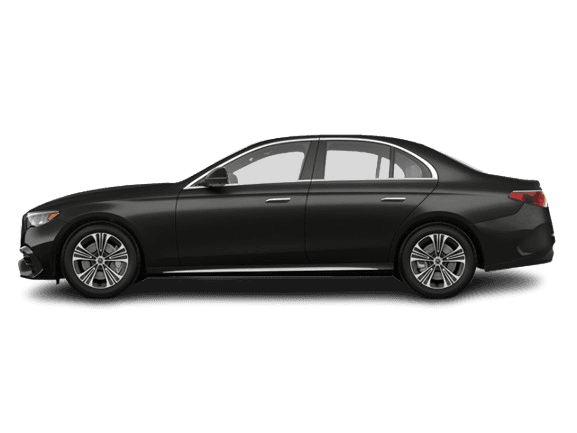
The couple
Quiet, intimate transportation for first looks, ceremony arrivals, portraits, and the getaway.
Ideal for 1 to 2 passengers$120 per hour, all-in
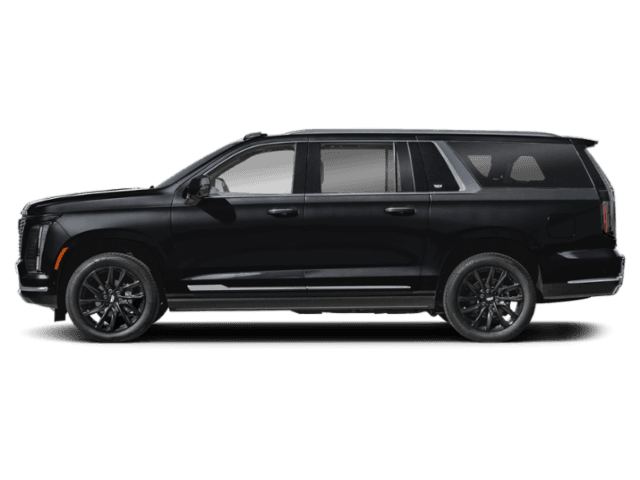
Immediate family
More room for formalwear, bouquets, luggage, parents, and close family without sacrificing polish.
Ideal for 2 to 5 passengers$150 per hour, all-in
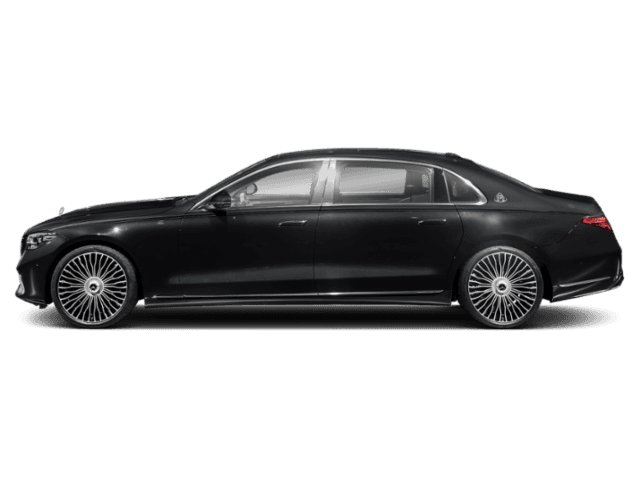
The arrival car
For the bridal arrival and exit that will be photographed, VIP guests, and private aviation pickups.
Up to 3 passengers$175 per hour, starting rate
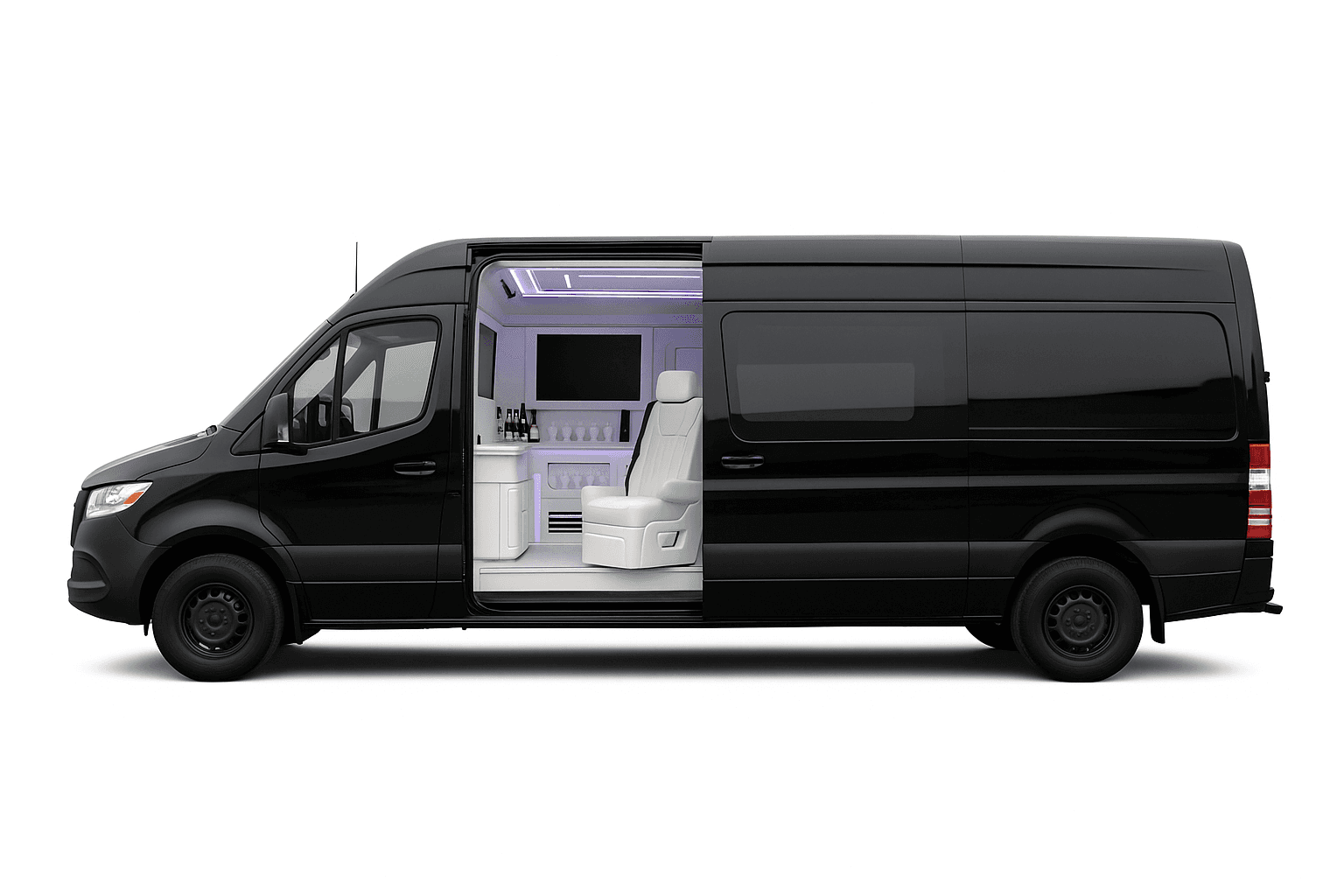
Wedding party
Comfortable group movement between getting-ready locations, ceremony, portraits, and reception.
Confirm assigned seating and luggage layout$200 per hour, starting rate
Guest experience
Multiple vehicles, planned departure waves, and one dispatch strategy for larger guest movements.
Scaled to your guest countComparison guide
If your search starts with wedding limo service NYC or Long Island wedding transportation, use the provider comparisons to separate pretty vehicle photos from the dispatch, shuttle, airport, and venue details that actually protect the wedding timeline.
Planning reference
Wedding transportation is the only vendor category on a wedding day whose failures are immediately visible to everyone. A late cake is a story told afterwards. A late bridal car is a ceremony that starts thirty minutes behind, a photographer whose golden-hour window closes, and a reception that runs into overtime charges at the venue. Because of that, the useful way to think about transportation is not as a car rental with a driver attached but as the timing infrastructure the rest of the day depends on.
In New York specifically, three things make that infrastructure harder than it is elsewhere. The first is that distances are short but times are unpredictable: a two-mile crosstown leg in Midtown at five in the afternoon can take longer than a fifteen-mile run up the Hudson. Planning to distance rather than to observed traffic behavior is the single most common cause of a wedding timeline collapsing.
The second is that venue access is genuinely constrained. Manhattan hotels have specific loading arrangements and no tolerance for a Sprinter idling in a bus lane. Brooklyn waterfront venues sit on cobbled streets with no covered approach. Estate venues in Westchester and Connecticut have private drives with tree cover and gravel surfaces. The vehicle that suits the guest count is not always the vehicle that can reach the door, and that conflict has to be resolved before the contract is signed rather than on the day.
The third is that a New York wedding almost always draws guests from elsewhere. That means airport arrivals across four airports with different traffic profiles, hotel blocks that may be split across two neighborhoods, and a late-night departure problem in a city where ride-hailing supply collapses at precisely the hour a reception ends. Each of those is solvable, but only if it is planned as part of one transportation design rather than handled separately as it comes up.
Nearly every wedding, regardless of size, breaks down into four distinct transportation jobs. Confusing them is what produces both overspending and gaps in coverage.
There are two ways to buy chauffeured transportation and the choice has more effect on the final figure than the vehicle class does. Hourly charter holds a vehicle and chauffeur for a continuous block of time. The clock starts when the vehicle leaves the garage and stops when it returns, and inside that block the vehicle waits, repositions, and moves whenever you need it. Point-to-point pricing covers a single defined journey from one address to another, with the wait, the return, and any intermediate stops excluded.
Hourly is right whenever a vehicle needs to be available rather than merely to complete a trip. The couple's car is hourly by definition, because it waits through the ceremony and the portraits. A wedding-party Sprinter that runs three legs across an afternoon is less costly hourly than as three separate transfers, and it is more reliable because the same vehicle stays with the group instead of a new one being dispatched each time.
Point-to-point is right for airport runs, for a single one-way guest transfer, and for anything where the vehicle genuinely leaves after the drop. An airport pickup billed hourly starts costing money the moment the vehicle leaves the garage for a run that may involve an hour of flight-delay waiting; billed point-to-point with flight tracking, that risk sits with the operator rather than with you.
The three-hour minimum on hourly service exists because a chauffeur's day cannot be sold in half-hour increments, because the garage-to-garage cycle for even a short job consumes most of a three-hour block. Understanding that changes how you plan: if a vehicle is needed for two separate hour-long jobs three hours apart, keeping it on the clock across the gap is often less costly than releasing it and paying two minimums.
The method that works is to build the timeline backwards from fixed points and then add buffer at the transitions rather than spreading it evenly. The fixed points are the ceremony start, the reception start if the venue is different, and the venue's contractual end time. Everything else is flexible and should be treated as such.
Work back from the ceremony first. If the ceremony is at four, the couple should arrive at three-forty, which means departing the getting-ready location at three-ten for a fifteen-minute drive. That fifteen-minute drive should be checked against the same day of the week and time of day, not against an average. A Saturday afternoon crosstown estimate taken on a Tuesday morning is worthless.
Then place the guest arrival using the ceremony’s seating deadline. Work backward through the venue walk, unloading, road journey and hotel boarding. Ask the venue and operator to confirm workable buffers for the actual group instead of relying on a standard minute count.
The transitions are where buffer belongs. Fifteen minutes between the ceremony ending and the portraits beginning. Twenty minutes between the portraits and the reception arrival. Fifteen minutes of slack in the shuttle schedule between waves. Buffer placed at transitions absorbs delay without pushing everything downstream; buffer spread thinly across every leg disappears into the first problem you hit.
Finally, plan the end of the night before you plan anything else about the night. The venue has a hard end time and a fine for exceeding it. If the last shuttle leaves at that end time, the loading happens during the fine window. Schedule the final departure fifteen minutes early and run an earlier wave at around eleven for the guests who want to leave before the last dance. That earlier wave is the one couples cut to save money and then wish they had kept.
Most transportation plans that cost more than expected do so for the same handful of reasons, none of which involve the hourly rate being higher than expected.
The quotes you receive will look similar. What separates operators is the set of details that only surface when you ask directly.
Service runs across all five boroughs, Westchester, Long Island including the Hamptons, northern and shore New Jersey, and Fairfield and inland Connecticut. The hourly rate does not change by location, which matters because it means the cost difference between a Manhattan wedding and a Litchfield County one is driven entirely by time: the garage-to-garage cycle, the length of each leg, and whether vehicles stay overnight.
That has a practical consequence worth understanding when you compare quotes. An operator based near your venue may quote fewer hours for the same service simply because their empty legs are shorter. Conversely, a wedding with multiple New York City legs and one distant venue is usually better served by one operator handling the whole plan than by two handling halves of it, because the handover between operators is where day-of coordination breaks.
Each service area has its own constraints and its own page setting them out in detail: bridge choices for Staten Island, unpaved estate drives in Westchester, eastbound Friday traffic for Long Island, seasonal Route 27 behavior on the East End. If your venue is in one of those areas, the area page is a more useful starting point than a general planning guide, because the specific constraint at your venue is usually the thing that determines the plan.
These are the hourly floors for wedding work. A 3-hour minimum applies to hourly bookings, and the clock is garage to garage, so a long deadhead to a Hamptons or Connecticut venue affects the total even when the on-site portion is short.
| Vehicle class | Estimated hourly | 3-hour estimate | Typical wedding use |
|---|---|---|---|
| Executive sedan | $120 / hour | 3 hours ($360) | Couple arrivals, parents, officiant, planner control car |
| Luxury SUV | $150 / hour | 3 hours ($450) | Family groups, formalwear and luggage, photo-stop routing |
| Mercedes S-Class | $175 / hour | 3 hours ($525) | Bridal arrival and exit car, VIP guests, private aviation pickups |
| Mercedes Sprinter | $200 / hour | 3 hours ($600) | Wedding-party movement, hotel shuttle waves, airport groups |
Sedan and SUV hourly estimates include gratuity and applicable service/card charges. S-Class and Sprinter are starting rates; the booking form confirms your final price, which can vary with taxes, tolls and availability. Confirm the final total, billable hours and trip-specific extras in your written quote. One-way transfers are quoted for the exact route.
Hourly and block estimates are rounded separately; multiplying a rounded hourly figure can differ from the quoted block total.
Hourly bookings have a three-hour minimum. Sedan and SUV estimates include gratuity and applicable service/card charges; confirm billable travel time and trip-specific extras.
Wedding transportation questions
Book six to nine months ahead for peak spring and fall Saturdays. Larger weddings, multi-venue timelines, and dates requiring several Sprinters or SUVs benefit from nine to twelve months of lead time. We can still help with shorter timelines when vehicles are available.
Yes. We can work from your planner's master timeline, venue load-in rules, hotel room blocks, photo schedule, and final guest manifest. One transportation point person keeps updates and day-of decisions organized.
Couples often choose an executive sedan or luxury SUV, wedding parties use SUVs or Mercedes Sprinters, and guests move in Sprinters or larger group vehicles. The right mix depends on passenger count, attire, luggage, venue access, and how many trips must happen at once.
Yes. We plan hotel pickup windows, loading points, guest counts, venue arrival targets, return waves, and late-night transportation. Shuttle plans can include Manhattan, Brooklyn, Queens, Long Island, Westchester, New Jersey, and Connecticut.
Yes. We arrange JFK, LaGuardia, Newark, and Teterboro airport transfers with flight tracking, luggage-aware vehicle selection, meet-and-greet options, and hotel delivery for individuals or groups.
Yes. Hourly service can include getting-ready locations, first-look sites, ceremony, portrait stops, reception, after-party, and hotel return. We account for NYC traffic, loading zones, photo timing, and vehicle staging.
Pricing depends on vehicle type, service hours, date, pickup locations, number of vehicles, route complexity, wait time, and return trips. Share your timeline and guest count for a tailored proposal rather than a one-size-fits-all package.
Hourly charter holds a vehicle and chauffeur for a continuous block of time, billed garage to garage, with a three-hour minimum. The vehicle waits, repositions, and moves whenever you need it, which is what the couple's car and a wedding-party Sprinter both require. Point-to-point covers one defined journey between two addresses with no wait or return included, which suits airport transfers and single one-way guest runs.
Count from the first pickup to the final drop rather than from the ceremony to the reception. A wedding with a midday getting-ready pickup and a midnight exit is a twelve-hour assignment. Add the venue-to-venue legs, the portrait stops, and the waiting time between them, then add buffer at the transitions. Overtime is billed in increments, so underestimating by an hour usually costs a full hour.
Published sedan and SUV hourly estimates include gratuity and applicable service/card charges. S-Class and Sprinter are starting rates; the booking form confirms your final price, which can vary with taxes, tolls and availability. Confirm billable start and end times, tolls, parking and any trip-specific extras in the proposal. Ask for an itemized proposal that shows each charge when comparing quotes so you are comparing the same scope.
Use the assigned vehicle’s confirmed passenger seats after accounting for luggage and assistance needs. Multiply those seats by the trips that fit the actual loading and driving window, then round up the number of vehicles needed. Two waves only work when the complete route cycle fits before the guest arrival deadline.
Ask for the overtime rate, billing increment, and availability terms in writing before booking. Build a realistic buffer into the reserved hours and tell the transportation contact as soon as the timeline begins to slip; an extension can depend on vehicle and chauffeur availability later that day.
Yes, and it is usually better than splitting the plan. Weddings that involve New York City legs plus a New Jersey, Westchester, or Connecticut venue are routinely handled as one assignment. The handover between two operators is where day-of coordination most often breaks, so keeping a multi-state plan with one dispatch means one timeline, one contact number, and no ambiguity about which vehicle is where.
Your date. Your people. Your plan.
Share your wedding date, venues, estimated guest count, and timeline. We will help turn it into a clear transportation proposal.
Guests flying in for the wedding